
The Road Ahead: How Robotaxis Are Paving the Way for Mobility
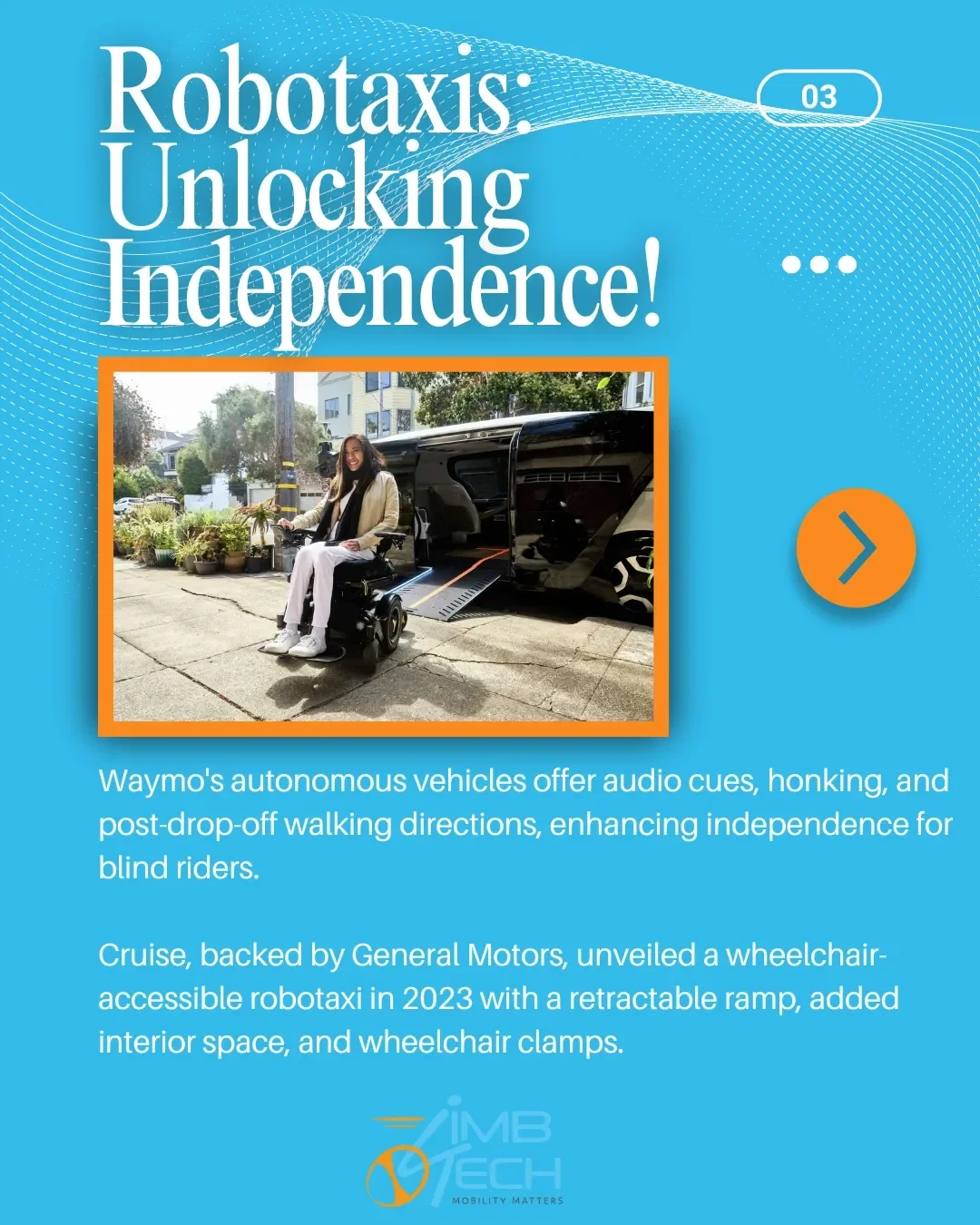
Imagine a ride where independence is built right in. That's the powerful promise of Robotaxis, or autonomous vehicles, which are rapidly evolving to profoundly enhance mobility for individuals with disabilities. These self-driving cars are not just a futuristic concept; they are a present reality, designed with incredible accessibility features to support diverse needs and empower riders.
Need a seating or mobility evaluation?
You don't have to wait to get started. LimbTech can help you navigate the referral process.
Start a Referral →
Revolutionizing Accessible Transportation with Cutting-Edge Technology
The advent of accessible autonomous vehicles signifies a monumental leap forward in inclusive transportation. Companies at the forefront of this revolution are embedding features that directly address common mobility challenges:
Waymo's Innovative Solutions for Blind Riders: Waymo, a leader in autonomous driving technology, offers features specifically designed for blind riders. These include intuitive audio cues, the ability to activate the car's horn or play a melody to easily locate the vehicle at pickup, and clear turn-by-turn walking directions after drop-off. These thoughtful additions significantly improve independence for blind individuals and foster a greater sense of control during their journeys.
Cruise's Groundbreaking Wheelchair-Accessible Robotaxi: Backed by General Motors, Cruise unveiled a truly groundbreaking wheelchair-accessible robotaxi in 2023. The Cruise accessible robotaxi is a purpose-built vehicle that is meticulously designed with a retractable ramp, ample interior space, and secure floor clamps for wheelchairs. This ensures a safe, comfortable, and dignified transportation solution for wheelchair users.
Pilot Programs: Building Truly Inclusive Urban Mobility
The commitment to disability inclusion in the future of transportation is evident in exciting pilot programs underway. In Detroit, for instance, May Mobility launched a robotaxi pilot program in June 2024 specifically targeting elderly and disabled residents. Crucially, this initiative has a firm commitment to including wheelchair-accessible vehicles in its fleet. Such programs are vital steps toward creating truly inclusive urban transportation systems that serve all members of the community.
The benefits of autonomous vehicles for disabled people are clear: increased freedom, reduced reliance on others, and the ability to access essential services and social activities more easily. As self-driving car technology continues to advance, we move closer to a future where accessible transportation is the norm, not the exception.
At LimbTechNC.com, we are dedicated to enhancing your independence. Explore our range of DME (Durable Medical Equipment) and discover how we can further support your accessibility and mobility needs today!
Need a seating or mobility evaluation?
You don't have to wait to get started. LimbTech can help you navigate the referral process.
Start a Referral →
